
When to See a Doctor
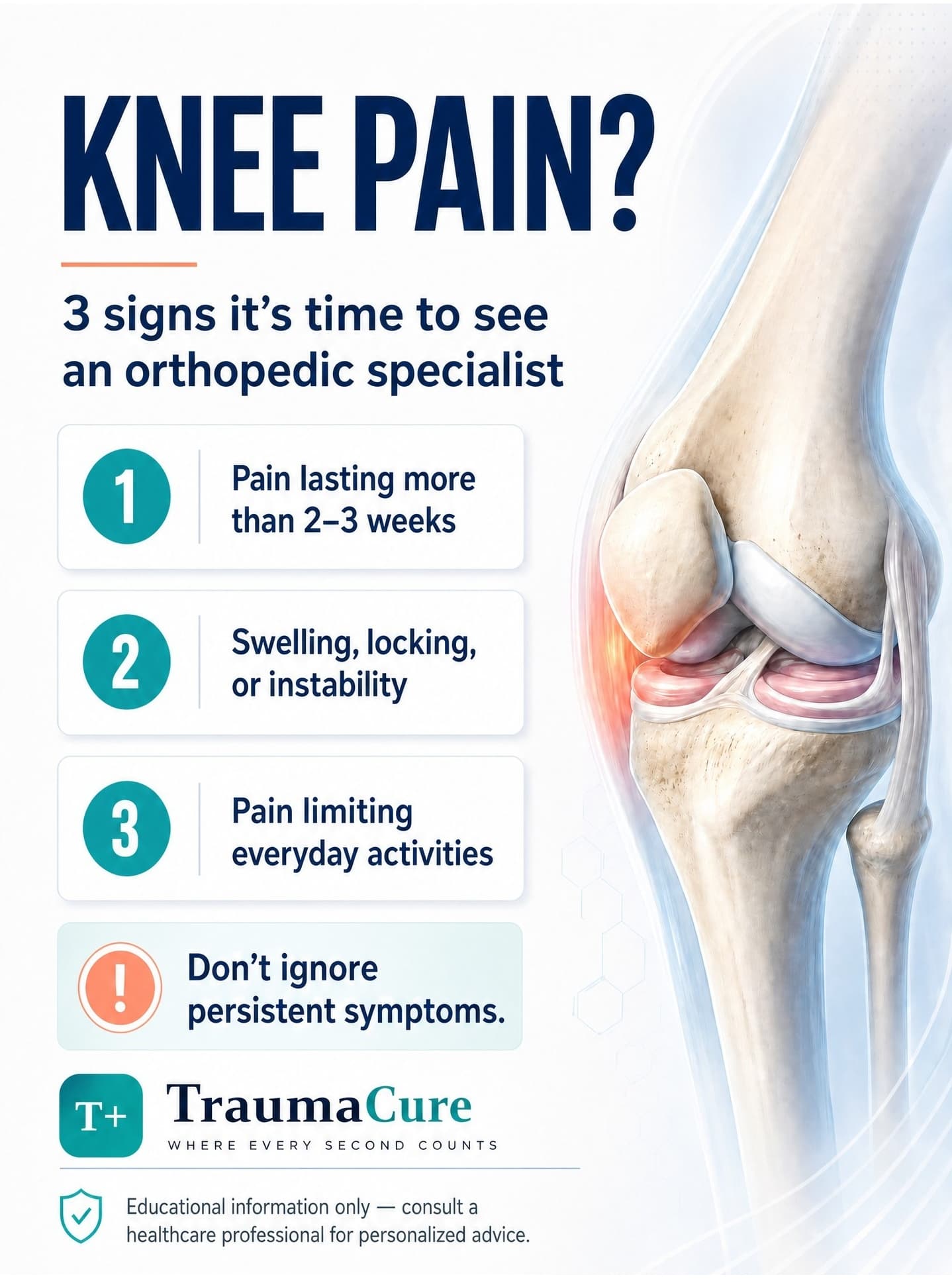
Knee Pain: 3 Signs It's Time to See an Orthopedic Specialist
A little knee pain after a long day is common. But some signs mean it's time to stop waiting and see an orthopedic specialist — here's how to tell the difference.
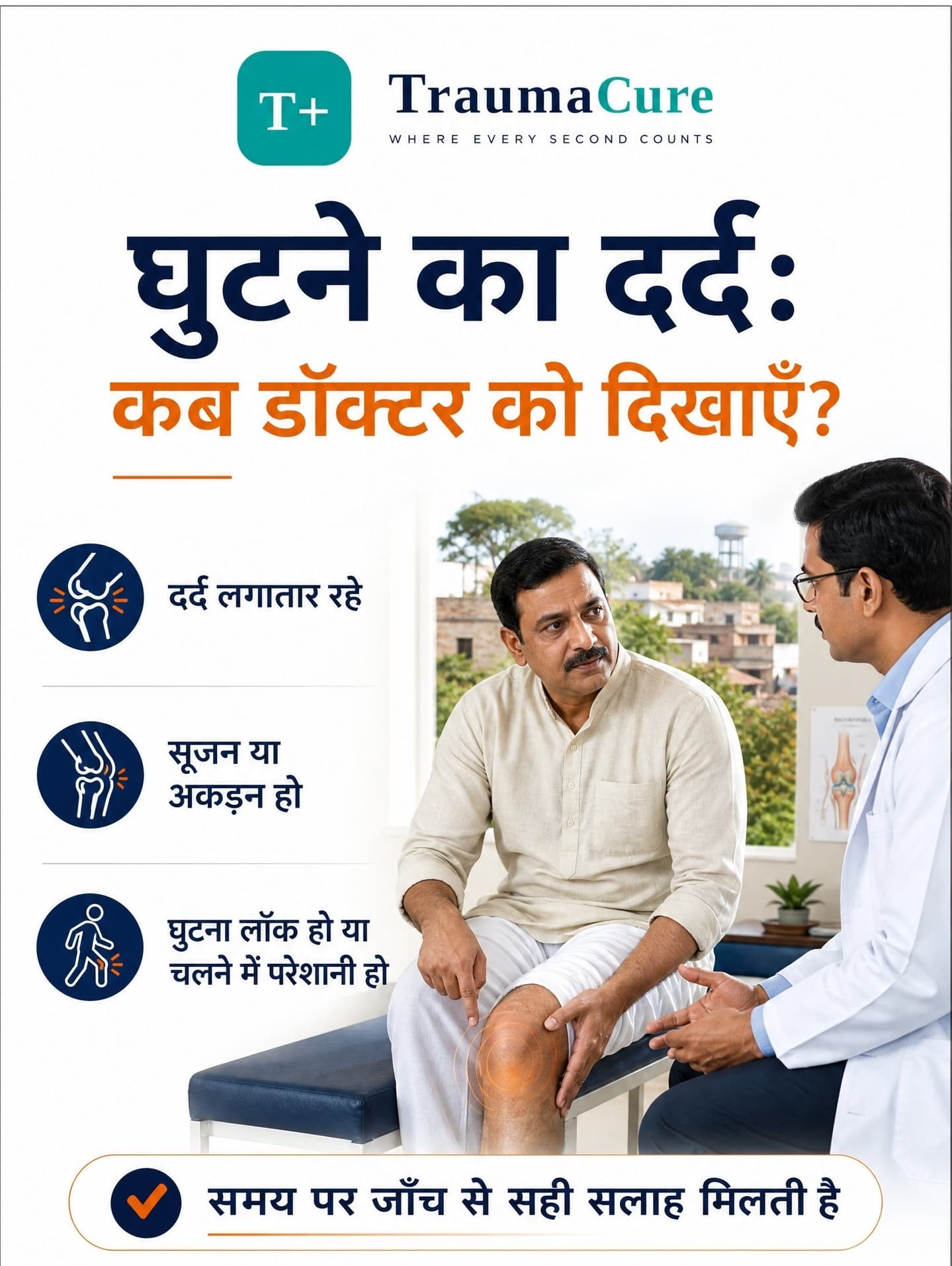
Almost everyone gets an achy knee once in a while — after a long walk, a day of standing, or simply getting older. Most of the time, rest and a few days of care are enough. But sometimes knee pain is your body's way of telling you something needs a specialist's attention.
1. Pain lasting more than 2–3 weeks. Ordinary strain usually settles down within a few days of rest. If your knee still hurts after two to three weeks, it's worth getting it checked rather than waiting it out.
2. Swelling, locking, or instability. A knee that swells up, catches or 'locks' when you bend it, or feels like it might give way when you walk or climb stairs, needs a proper examination — these can be signs of a ligament, cartilage, or joint problem.
3. Pain that limits your everyday activities. If knee pain is stopping you from walking normally, climbing stairs, sitting cross-legged, or doing your daily work, that's a clear sign it's affecting your quality of life and deserves a specialist's opinion.
Don't ignore persistent symptoms. Knee problems caught early are usually easier and faster to treat than ones left untreated for months. A timely check-up gives you the right advice — and often the right peace of mind, too.
This is general, educational information — it isn't a diagnosis for your specific knee. Please consult a qualified orthopedic doctor for advice suited to you.
Have a question about your own injury or pain?
Don't self-diagnose from an article — call or WhatsApp us and we'll guide you to the right care.